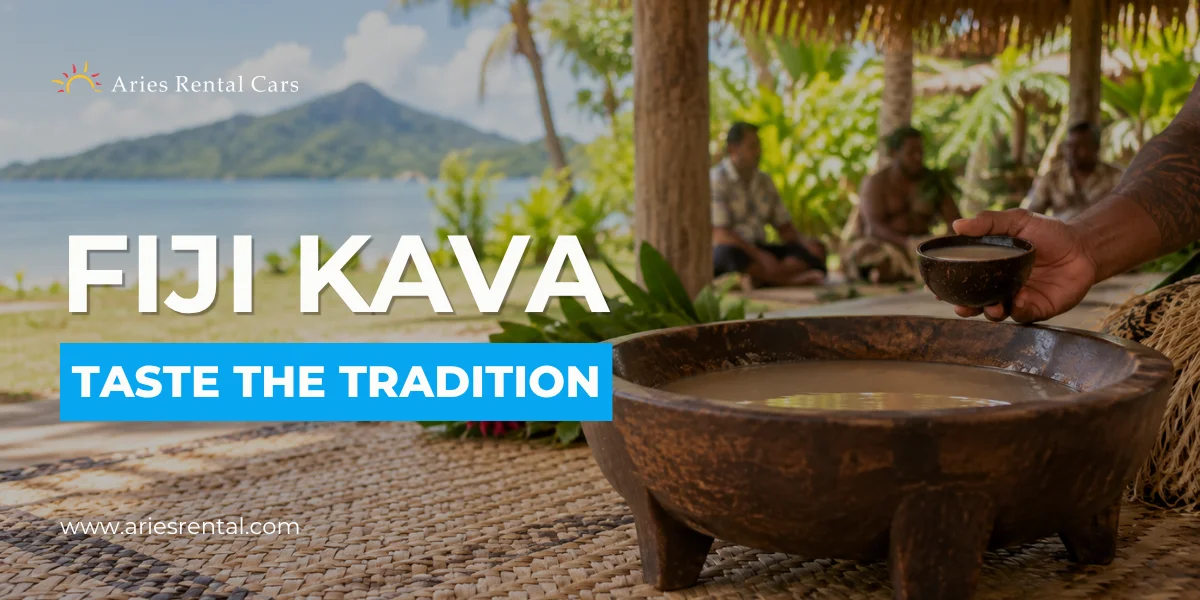
You’ll likely hear about kava before you ever taste it. It comes up in Nadi taxi conversations, resort welcome briefings, and village tour itineraries, usually with a knowing smile and some version of “just don’t make a face when you drink it.” For visitors planning a Fiji trip, drinking kava in Fiji is less a novelty drink stop and more a small window into how Fijian hospitality and community actually work.
This article covers what kava is, how the ceremony unfolds, what it tastes and feels like, the etiquette that matters most, and a few honest health notes worth knowing before you accept that first bowl.
What Is Kava?
Kava, known locally as yaqona, is made from the pounded root of Piper methysticum, a plant in the pepper family native to the Pacific. The dried root is ground down, mixed with water, and strained through cloth into a large wooden bowl called a tanoa. What comes out is a muddy, greyish-brown liquid that looks unremarkable but carries enormous cultural weight across Fiji and much of the wider Pacific.
Kava isn’t unique to Fiji. Related versions of the same drink appear across Samoa, Tonga, Vanuatu, and other Pacific nations, each with its own name and slightly different preparation and protocol. In Fiji specifically, yaqona sits at the centre of village life: welcomes, celebrations, dispute resolution, and everyday evening gatherings all tend to involve a bowl passed around a circle.
The Sevusevu: Presenting Kava as a Gift
Before you drink kava in a village setting, there’s usually a sevusevu, the formal presentation of a bundle of kava root to the village chief or his spokesperson as a gesture of respect. If you’re visiting a village independently, buying a bundle of kava root at a local market to bring as your sevusevu is standard practice, though most guided tours and resort-organised village visits handle this presentation on your behalf.
The ceremony itself opens with a scripted exchange between the visitors’ spokesperson and the host, formally expressing gratitude and respect. Once the chief or representative accepts the offering, the visit and everything that follows, the meal, the conversation, the freedom to look around, is considered properly welcomed rather than simply tolerated.
How to Drink Kava Like a Local
Once the kava is mixed and the ceremony gets underway, it’s served one person at a time in a half-coconut shell called a bilo, following a fairly consistent sequence wherever you encounter it in Fiji:
- Clap once, a single loud, cupped clap, as the bilo is handed to you.
- Say “Bula” as you accept the cup, ideally with both hands.
- Drink the whole bowl in one go, rather than sipping, since sipping is considered unusual and mildly impolite in this context.
- Clap three times after finishing, then hand the bilo back.
- The group responds, often with “maca” (finished) and a final round of claps together, before the bowl is refilled for the next person.
Hosts will typically offer a choice of portion before pouring: “high tide” for a full cup, or “low tide” for a half cup, and it’s completely acceptable, expected even, for first-timers to ask for low tide. Nobody will think less of you for pacing yourself.
What Kava Tastes and Feels Like
Most first-timers aren’t prepared for the taste, and it’s worth going in with realistic expectations rather than assuming it will taste like a typical drink. Kava is earthy, bitter, and peppery, with a muddy, slightly gritty texture, since it’s a suspension of root particles rather than a clear liquid. It’s not made for flavour, and even Fijians who’ve grown up with it generally describe it as an acquired taste rather than something naturally pleasant.
Physically, the most immediate effect is a mild numbing sensation on the lips and tongue, which fades within a few minutes. Beyond that, kava tends to produce a calm, relaxed feeling, sometimes described as heavy-legged or drowsy, quite different from the stimulating or disinhibiting effect of alcohol. It’s a sedative rather than an intoxicant in the way alcohol is, and traditional preparation doesn’t produce anything close to the impairment associated with drinking.
One point of etiquette worth remembering: even if you don’t enjoy the taste, showing visible distaste after drinking is considered disrespectful. A neutral expression, regardless of how you feel about the flavour, is part of accepting the hospitality gracefully.
Is There a Legal Drinking Age for Kava in Fiji?
Fiji’s legal drinking age for alcohol is 18, but kava is not classified or regulated as an alcoholic beverage, so the same age restriction doesn’t formally apply to it. That said, kava does have a genuine sedative effect, and it’s worth treating it with the same common sense you’d apply to any mind-altering substance, particularly around dosage, mixing it with alcohol, and how you plan to get back to your accommodation afterward.
Kava Etiquette: What to Know Before You Sit Down
A few courtesies go a long way toward being a respectful participant rather than an awkward observer:
- Dress modestly. In village settings, shoulders and knees should generally be covered; women are often expected to wear a skirt, dress, or sarong below the knee, and men should avoid singlets or very short shorts.
- Remove hats and sunglasses before entering a kava circle or a village more broadly.
- Sit low and avoid stepping over the tanoa or over seated people. If you need to move, go around rather than across.
- Don’t turn your back on the chief or senior members present, particularly during a formal ceremony.
- Follow the seating and serving order rather than assuming you can sit or drink out of turn. Your host or guide will generally direct you.
Health Notes Worth Knowing
Traditional, water-based kava as prepared and served in Fiji has a long history of everyday use with a low rate of reported side effects. That said, it’s worth understanding the distinction between this traditional preparation and the concentrated kava extracts sold as dietary supplements elsewhere in the world. The FDA has issued advisories linking concentrated kava supplement products, not the traditional beverage form, to rare but serious cases of liver injury, and generally recommends caution around heavy or prolonged use, particularly for anyone with existing liver conditions, anyone pregnant, or anyone combining kava with alcohol. If you have any relevant health concerns, it’s sensible to check with a doctor before joining a kava session, and to treat it, like any mildly sedating substance, in moderation.
Where to Try Kava in Fiji
For most visitors, there are two realistic ways to experience kava during a trip. The first is through a guided village visit, often arranged through your accommodation or a local tour operator, where the full sevusevu and ceremony unfold as described above. The second is a more casual resort setting, where an evening kava circle is often paired with talanoa (conversation), music, and sometimes a broader Fijian culture night featuring a lovo feast and traditional dance.
If you’d like to bring your own bundle of kava root as a gift for a village visit, it’s easy to find at Fiji’s markets, alongside the produce, spices, and other goods that make wandering through them worthwhile in their own right. Kava also comes up naturally as part of a broader look at the history of Fiji, so it’s worth reading into if you’re curious about the wider cultural picture beyond the bowl itself.
Conclusion
Drinking kava in Fiji is less about the taste and more about what accepting the bowl represents: a small act of participation in a custom that’s genuinely central to Fijian life, not a performance staged for visitors. Go in expecting an earthy, bitter drink rather than something enjoyable on flavour alone, follow your host’s lead on the clapping and serving order, and don’t be afraid to ask for “low tide” if you’d rather ease in gently. Approached with a bit of curiosity and respect, it tends to be one of the more memorable parts of a Fiji trip, well beyond the beach and the pool bar.
Frequently Asked Questions
Kava is generally described as earthy, bitter, and peppery, with a muddy, slightly gritty texture. It’s not considered pleasant-tasting by most first-timers, and even regular drinkers describe it as an acquired taste.
Kava isn’t classified as an alcoholic beverage, so Fiji’s legal drinking age of 18 for alcohol doesn’t formally apply to it. It’s still a mildly sedating substance, so it’s worth approaching with sensible caution regardless of age.
These are the two portion options typically offered when kava is served: “high tide” for a full cup and “low tide” for a half cup. First-timers are generally encouraged to start with low tide.
Outright refusing can come across as impolite in a formal ceremony, but asking for a smaller “low tide” portion is a widely accepted way to participate without overcommitting. If you have a genuine health reason to avoid it, a polite, brief explanation is generally understood.
Dried kava root and kava powder are commonly sold at markets and souvenir shops in Fiji. If you’re bringing any home, it’s worth checking your destination country’s import rules in advance, since regulations on kava vary significantly between countries.