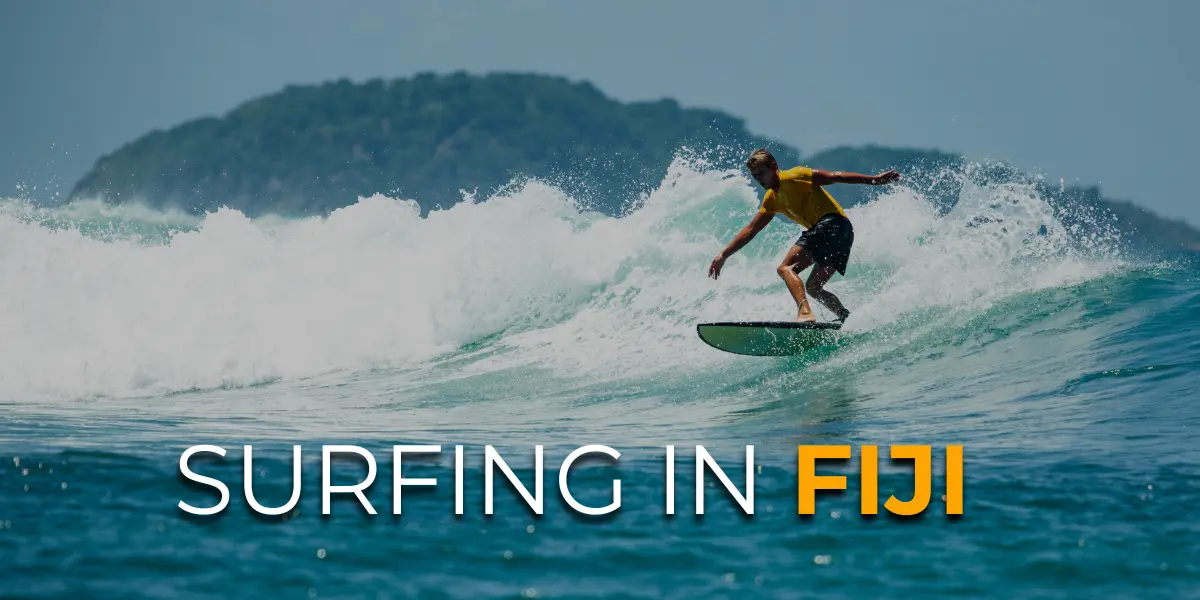
Surfing in Fiji is one of the best reasons to plan a trip beyond the resort pool. The country sits in the warm South Pacific, surrounded by reef passes, island channels and deep-water swell windows that can produce clean, powerful waves throughout the year. For experienced surfers, names like Cloudbreak, Restaurants and Frigates are enough to justify the flight. For newer surfers, Fiji can still work beautifully, but it requires choosing the right beach, the right operator and the right conditions.
This guide covers the best time to surf in Fiji, where to go, what skill level you need, what to pack, how to stay safe around reef breaks, and how to plan your trip if you are travelling from the US, UK or Australia. It is written for visitors who want practical information before they arrive, not just a list of famous wave names.
What Makes Surfing in Fiji Special?
Fiji is not a typical beginner beach-break destination. Much of the country’s best surf breaks over coral reef, often a boat ride away from the nearest island or resort. That is exactly what makes Fiji so attractive to travelling surfers. The water is warm, the waves can be incredibly clean, and many breaks sit in postcard-like surroundings with turquoise water and palm-fringed islands in the background.
The main surf zones include the Mamanuca Islands, the Coral Coast on Viti Levu, and more remote areas such as Kadavu and Taveuni. The Mamanucas are the best-known because they give access to some of Fiji’s most famous waves, including Cloudbreak, Restaurants, Namotu Lefts, Wilkes Passage and Swimming Pools. Tourism Fiji also describes Fiji as a year-round surf destination with waves for everyone from first-timers to experienced surfers, although the best-known reef breaks are better suited to confident intermediates and advanced surfers.
Fiji’s surf experience also feels different because access often depends on boats, tides and local surf operators. You are not usually driving up to a car park, checking the waves and paddling out from a sandy beach. For many breaks, your day starts with a boat transfer, local guidance and a decision based on the swell, wind and tide.
If you plan to explore beyond one resort area, having a rental car in Fiji can make it easier to reach beaches, coastal towns, markets and day-trip departure points, especially around Nadi, Denarau, Natadola, Sigatoka and the Coral Coast.
Best Time to Surf in Fiji
Fiji has waves all year, but the surf changes with the seasons. The main surf season generally runs from April to October, when Southern Hemisphere winter swells push more consistently into Fiji’s reef passes. This is when experienced surfers often target the bigger, cleaner days at breaks such as Cloudbreak, Restaurants and Frigates. Several surf operators and travel guides describe April to October, or May to October, as the prime season for stronger and more consistent swell.
From November to March, Fiji is warmer and more humid, with smaller swells on average. That does not mean the surf is flat. You can still get excellent waves, but swells may be shorter-lived and less predictable. For intermediate surfers, this period can sometimes be more forgiving, especially when conditions line up at softer breaks.
The best month depends on your ability. Advanced surfers chasing powerful reef waves often prefer May to September. Intermediate surfers may enjoy the shoulder months when there is still swell but less intensity. Beginners should focus less on the month and more on booking lessons at suitable beach locations, because Fiji’s famous reef breaks are not ideal places to learn.
Best Surf Spots in Fiji
Cloudbreak
Cloudbreak is Fiji’s most famous wave and one of the most respected left-hand reef breaks in the world. It sits near Tavarua in the Mamanuca Islands and can range from playful on smaller days to extremely serious when a proper swell arrives. On the right day, it offers long walls, hollow sections and heavy barrels. On the wrong day for your skill level, it can be intimidating and dangerous.
Cloudbreak is not a beginner wave. Even confident surfers should treat it with respect because it breaks over reef, can hold significant size and changes character with tide and swell direction. The Guardian described Cloudbreak as one of the world’s premier surf spots, and it remains one of the major reasons surfers travel to Fiji.
Restaurants
Restaurants is another iconic left-hander near Tavarua. It is famous for its mechanical shape, fast sections and clean barrels when the swell and tide are right. Compared with Cloudbreak, it is often more tide-sensitive and can break very close to shallow reefs. This is a wave for experienced surfers who are comfortable moving quickly, reading reef waves and committing to fast take-offs.
The name comes from its location near the island resort area, but the wave itself is far from casual. If you are not sure whether you are ready for Restaurants, speak honestly with a local surf guide before paddling out.
Namotu Lefts
Namotu Lefts is generally considered more approachable than Cloudbreak or Restaurants, though it is still a reef wave and should not be underestimated. It can offer long left-hand walls with workable sections, making it popular with intermediate and advanced surfers. On smaller days, it may suit confident intermediates. On bigger days, it becomes more demanding.
Its location near Namotu Island makes it one of the classic Mamanuca breaks, and many surf boats include it in the daily decision-making process depending on swell, wind and crowd levels.
Swimming Pools
Swimming Pools is often described as one of the more user-friendly reef waves in the Mamanuca area. It is a right-hander near Namotu Island and can be a good option when conditions are smaller. Namotu Island’s own surf information notes that Swimming Pools is located only a few hundred metres south of the resort, making it one of the closest breaks in that area.
That said, “user-friendly” in Fiji still does not mean careless. It is still a reef setup, and conditions can change. It is best surfed with local advice, especially if you are new to reef breaks.
Wilkes Passage
Wilkes Passage is a right-hander that can suit a wider range of surfers depending on the day. It is often mentioned alongside Cloudbreak, Namotu Lefts, Restaurants and Swimming Pools as one of the key breaks accessible from the Mamanuca resort areas. Some surf resorts describe these breaks as roughly 20 to 30 minutes by boat from nearby islands, though travel time depends on where you are staying and the day’s conditions.
Wilkes can be fun and rippable, but it still breaks over reefs. If you are progressing from beach breaks to reefs, this is the kind of wave where guidance matters.
Frigates Passage
Frigates is a powerful left-hand reef break located off the southern coast of Viti Levu, often accessed from Pacific Harbour or nearby areas. It is sometimes compared with the Mamanuca breaks because of its quality, but it feels more remote and exposed. When it is on, Frigates can be long, powerful and memorable.
Because it is farther offshore, surfers should be prepared for a proper boat trip and changing ocean conditions. This is not the place to turn up casually without checking the forecast, boat arrangements and your own ability level.
Natadola Beach
Natadola Beach is one of the better-known beach options on Viti Levu and is often recommended for beginners or casual surfers when conditions are suitable. Fiji Guide notes that most Fiji surf spots are reef breaks and not ideal for beginners, while Natadola is a better location for learning compared with the more serious reef setups.
Natadola is also useful for travellers who are not building their entire holiday around surfing. It is scenic, accessible by road from Nadi and the Coral Coast, and can fit into a broader beach day. If you are planning a mixed itinerary, you may also enjoy exploring some of the best beaches in Fiji while choosing the right conditions for a surf lesson.
Sigatoka
Sigatoka is one of Fiji’s more accessible surf areas for those staying along the Coral Coast. Unlike many famous offshore reef breaks, the Sigatoka area includes river-mouth and beach-style conditions, which can make it more approachable in the right swell. Surfline’s Fiji travel information notes that Fiji is mostly reef breaks, with Sigatoka standing out as a river-mouth option.
Conditions here can vary, so it is worth speaking to a local surf school or guide rather than assuming it will always be beginner-friendly. On the right day, however, it can be a practical option for travellers based on the main island.
Is Fiji Good for Beginner Surfers?
Fiji can be good for beginner surfers, but only if you choose the right place to learn. The mistake some visitors make is hearing that Fiji is a world-class surf destination and assuming that means every beach is suitable for lessons. In reality, many of Fiji’s famous waves break over coral reef and are designed by nature for people who already know how to surf well.
Beginners should look for surf schools that teach at safer beach breaks or mellow conditions, usually around places such as Natadola or selected Coral Coast beaches. A good instructor will check the tide, swell, wind and current before taking you out. They should also explain where to paddle, where to stand, what to do if you fall, and how to avoid stepping on reef or damaging coral.
For first-timers, Fiji’s real appeal is not just catching a wave. It is learning in warm water, with beautiful scenery and a slower pace than crowded surf schools in some larger destinations. The key is to avoid rushing into advanced reef waves too soon.
Reef Break Safety in Fiji
Reef safety is one of the most important parts of surfing in Fiji. Coral reef is sharp, living and often much closer to the surface than it looks from the boat. A small mistake can mean cuts, infections or damage to the reef itself.
Surfers should avoid jumping feet-first in shallow reef areas. When you fall, try to land flat rather than diving down. Do not stand on coral if you can avoid it, both for your own safety and to protect the marine environment. Reef booties can help at certain breaks, though many experienced surfers prefer not to wear them while actually riding waves. If you are unsure, ask your guide what is normal for that break.
It is also wise to carry a basic reef-cut kit with antiseptic, waterproof dressings and any personal medication you may need. Travel insurance should include surfing, especially if you plan to surf reef breaks or take boat trips. Visitors from the US, UK and Australia should check the wording carefully because some policies treat surfing differently depending on location, conditions or whether the activity is guided.
What to Pack for a Fiji Surf Trip
Packing for Fiji depends on whether you are bringing your own boards or renting locally. Serious surfers usually bring at least one everyday shortboard and, during the main swell season, a step-up board for larger days. A spare leash, extra fins, fin keys, wax for warm water and ding repair supplies are worth packing because surf-specific gear may not always be easy to find once you are away from Nadi or resort areas.
The tropical sun is strong, so bring high-protection reef-safe sunscreen, a long-sleeve rash vest or surf shirt, sunglasses, a hat and light clothing for boat transfers. Water temperatures are warm, so you will not need a wetsuit, but some surfers like a thin vest or rash guard for sun protection and minor reef contact.
For non-surf time, pack comfortable sandals, insect repellent, a reusable water bottle and clothing suitable for villages or local communities. Fiji is relaxed, but modest clothing is appreciated when away from beach and resort settings. A broader packing plan can help too, especially if your trip includes beaches, waterfalls, villages and island transfers, so this what to pack for Fiji guide can fit naturally into your planning.
How to Plan a Fiji Surf Itinerary
A good Fiji surf itinerary starts with choosing the right base. If surfing is the main purpose of your trip, staying in or near the Mamanucas gives you easier access to the famous breaks. Resorts and surf camps in this area often arrange boat transfers and daily wave checks.
If you want a mix of surfing, sightseeing, restaurants, local markets and road trips, staying on Viti Levu may be more flexible. Nadi, Denarau, the Coral Coast and Pacific Harbour can all work depending on which breaks you want to access. From Nadi or Denarau, you can connect to the Mamanucas. From the Coral Coast, you can explore beaches and surf schools. From Pacific Harbour, Frigates becomes more realistic.
For a first Fiji surf trip, many travellers do well with a split stay. Spend a few nights near Nadi or Denarau to recover from the flight and organise transfers, then move to a surf-focused island or coastal base. If your partner, family or friends are not surfing every day, choose somewhere with snorkelling, beach access, markets, cultural activities or day trips so the trip works for everyone.
Getting Around Fiji for Surfing
Getting around Fiji depends on the type of surf trip you are planning. For offshore reef breaks, boats are essential. These are usually arranged through surf resorts, island accommodation or local operators. For mainland beaches, a car can make your trip much easier, especially if you are staying around Nadi, the Coral Coast or Pacific Harbour and want to move between beaches, cafés, towns and viewpoints at your own pace.
Driving in Fiji is on the left, which feels familiar for visitors from the UK and Australia, but may take adjustment for travellers from the US. Roads around popular tourist areas are generally manageable, though travel times can be slower than they look on a map. If you are planning surf checks or lessons, leave extra time rather than cutting it close.
A flexible day might include an early surf lesson near Natadola, lunch along the Coral Coast, and a stop at a local market or lookout on the way back. Surfing does not need to be separate from the rest of your Fiji experience.
Surf Etiquette and Local Respect
Surf etiquette matters everywhere, but it matters even more when you are a visitor in a small island community. Fiji has a warm and welcoming reputation, but that should never be mistaken for permission to act carelessly in the water.
Respect the line-up, wait your turn and do not paddle straight to the peak if locals or other surfers have been waiting. Listen to boat captains and surf guides. They understand the reef, tide and current better than someone visiting for a week. If a break is too crowded, be patient or ask whether another wave might be working.
It is also worth understanding that Fiji’s surf breaks are connected to local communities, marine areas and cultural histories. In recent years, there has been renewed public discussion around Indigenous rights and governance over traditional marine areas, including famous surf zones such as Cloudbreak. For visitors, the practical takeaway is simple: surf with respect, use responsible local operators and remember that these waves are part of a living place, not just a holiday product.
Tips for International Travellers
Travellers from Australia have the easiest access to Fiji, with relatively short flights from cities such as Sydney, Brisbane and Melbourne. Visitors from the US often arrive via Los Angeles, San Francisco or Honolulu connections, while UK travellers usually connect through Asia, Australia, New Zealand or the US. Because boards can be expensive to fly with, check airline baggage rules before booking.
Fiji uses the Fijian dollar. Credit cards are accepted in many hotels and resorts, but cash is still useful for smaller shops, village visits, roadside stalls and some local services. English is widely spoken, which makes logistics easier for international visitors.
Internet access can vary once you leave main towns and larger resorts. If your surf trip depends on forecasts, transfers or WhatsApp communication with operators, consider getting a local SIM or eSIM. Also, do not schedule your best surf day too close to your international departure. Boats, weather and swell windows do not always follow your calendar.
Conclusion
Surfing in Fiji can be unforgettable, but the best trip comes from matching the destination to your ability. Advanced surfers may come for Cloudbreak, Restaurants and Frigates. Intermediate surfers can find excellent days at breaks such as Namotu Lefts, Wilkes and Swimming Pools when conditions are right. Beginners can still enjoy surfing in Fiji, but should focus on beach lessons and experienced local instruction rather than famous reef breaks.
The key is to plan with respect for the ocean, the reef and the local communities connected to these waves. Choose the right season, take safety seriously, use reliable operators and leave space in your itinerary for weather and swell changes. Do that, and Fiji becomes more than a surf destination. It becomes one of the most memorable ocean experiences in the South Pacific.
Frequently Asked Questions
Is Fiji good for surfing?
Yes, Fiji is one of the best surf destinations in the South Pacific. It is especially known for warm water, reef breaks and world-class waves such as Cloudbreak, Restaurants, Namotu Lefts and Frigates. However, many of the famous breaks are better for intermediate and advanced surfers rather than complete beginners.
What is the best time of year to surf in Fiji?
The main surf season is usually April to October, with May to September often producing the strongest and most consistent swells. November to March can still have good surf, but waves are usually smaller and swells may be less consistent.
Can beginners surf in Fiji?
Beginners can surf in Fiji, but they should choose suitable beach locations and book lessons with a local surf school. Many of Fiji’s famous waves break over coral reef and are not safe places to learn. Natadola and some Coral Coast areas are better starting points when conditions are suitable.
Where is the best place to surf in Fiji?
The Mamanuca Islands are the most famous surf region, with access to Cloudbreak, Restaurants, Namotu Lefts, Wilkes Passage and Swimming Pools. The Coral Coast and Pacific Harbour areas are also useful, especially for travellers staying on Viti Levu. Frigates Passage is a standout wave often accessed from the Pacific Harbour side.
Do I need reef booties for surfing in Fiji?
Reef booties can be useful at some spots, especially when entering or exiting over reef. Many experienced surfers prefer surfing without them for better board feel, but this depends on the break. Ask your surf guide before paddling out.
Do I need to bring my own surfboard to Fiji?
If surfing is the main purpose of your trip, bringing your own board is usually best. Advanced surfers may want an everyday board and a step-up for bigger swells. Casual surfers and beginners may be able to rent boards or use equipment provided by surf schools, depending on where they stay.
Is Cloudbreak suitable for intermediate surfers?
Cloudbreak can sometimes be manageable on smaller days for confident surfers, but it is generally known as a serious reef break. When there is size, it is best left to advanced surfers with reef experience.
Are Fiji’s surf spots crowded?
Fiji is usually less crowded than major surf destinations such as Bali or parts of Australia, but famous breaks can still get busy when the forecast is good. Boat access also means several groups may arrive at the same break around the same time.
Can I surf in Fiji without staying at a surf resort?
Yes, but you will need to organise transport, boat transfers or surf lessons depending on the break. Some travellers stay on the mainland and book surf trips separately, while others choose surf-focused island accommodation for easier daily access.
Is surfing in Fiji safe?
Surfing in Fiji can be safe when you choose waves that match your ability and follow local advice. The main risks are shallow reef, strong currents, powerful waves, sun exposure and boat logistics. Travel insurance that covers surfing is strongly recommended.