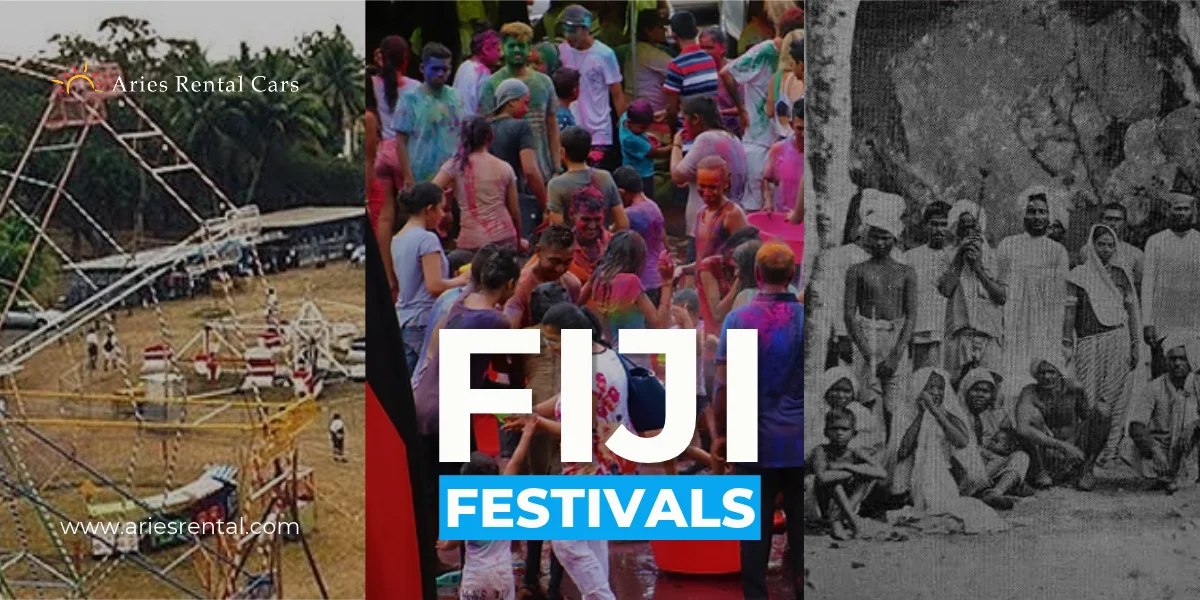
Most people plan a Fiji trip around beaches and weather, and the calendar of local celebrations barely gets a look. That’s a missed opportunity. Arrive in the right week and you could be watching a float parade through Suva, eating Bollywood-soundtracked street food at a sugar town carnival, or joining neighbours for Diwali sweets. Arrive a week earlier or later and you’d never know any of it happened.
This guide covers the main festivals in Fiji, roughly in the order they fall through the year, along with what actually happens at each one, how the music scene fits in, and a few practical tips for planning a trip around them. Exact dates move from year to year, so treat the timings below as a guide to the usual season rather than a fixed schedule.
Holi: The Festival of Colours (February or March)
Early in the year, Holi brings coloured powder, music, and sweets to Indo-Fijian communities across the country. It follows the Hindu calendar, so it lands in February or March depending on the year. It’s a lively, playful festival, and visitors who are invited to join in should expect to leave with colour on their clothes. Wear something you don’t mind staining.
Girmit Day (May 14)
Girmit Day is a public holiday marking the arrival of the first Indian indentured labourers in Fiji. It’s more commemorative than festive, with community events and reflection on how the Indo-Fijian community came to be part of the country. For travellers interested in how modern Fiji took shape, it’s a thoughtful date to be in the country.
Bula Festival in Nadi (July)
The Bula Festival is Nadi’s week-long community celebration, named after Fiji’s famous greeting. It brings live entertainment, a street parade, dance competitions, and a beauty pageant, and it doubles as a charity fundraiser for local causes. The 2026 edition ran from 18 to 25 July at King Charles Park. Because it sits in the town most visitors fly into, it’s one of the easiest festivals to fit into a trip, and it pairs naturally with some of the best things to do in Nadi if you’re staying a few extra days around it.
Fire Walking (July and August, and Year-Round on Beqa)
Fire walking in Fiji comes in two distinct forms, and they’re often confused. The first is the traditional Fijian practice of vilavilairevo, which belongs to the Sawau tribe of Beqa Island, just off the south coast of Viti Levu. According to tradition, the ability was granted to an ancestor roughly 500 years ago, and today it is performed by men from specific clans in a handful of Beqa villages. Beqa Island is the home of the practice, and demonstrations are sometimes arranged for visitors.
The second is the Hindu fire walking festival, an annual purification ritual practised by devotees after a period of fasting and prayer. In Suva it centres on the Mariamman Temple and tends to fall around July or August. This one is a serious religious observance rather than a show, so visitors attending should dress modestly, keep a respectful distance, and follow the lead of those around them.
Hibiscus Festival in Suva (August)
The Hibiscus Festival is Fiji’s largest and longest-running festival, first held in 1956 and now stretching across about a week in the capital. Expect a float parade, the Miss Hibiscus pageant, a large marketplace with food and craft stalls, live entertainment, and sporting events. The 2026 edition marked the festival’s 70th anniversary and ran from 29 August to 5 September, returning to its original home at Albert Park. If you’re building a trip around it, it’s worth giving yourself time in the city itself, since there’s plenty to see in Suva between festival events, from the museum and botanical gardens to the municipal market. Planning a trip to Suva around the festival week also helps you book accommodation early. Food stalls at the big community festivals are generally good value, so it’s an easy way to try a range of local dishes without committing to a sit-down meal.
Sugar Festival in Lautoka (September)
Lautoka is known as Fiji’s sugar city, and its Sugar Festival began in 1958 as a lead-up event so western Fiji residents who couldn’t travel to Suva for the Hibiscus Festival had a celebration of their own. It has since grown into a major event in its own right, with parades, food stalls, Bollywood-style entertainment, and a string of pageants, including Lady Sugar and Mr Sugar King. It has a strong Indo-Fijian flavour, and it’s a good way to see a side of Fiji that most resort-based visitors miss.
Fiji Day and Fiji Week (October)
Fiji Day on 10 October is a public holiday marking both the 1874 cession of Fiji to Britain and independence in 1970. The week leading up to it, known as Fiji Week, brings cultural performances, ceremonies, and community events in towns and cities around the country. Each place marks it in its own way, from speeches and school performances to kava and rugby in the local park, so the experience depends a lot on where you happen to be.
Diwali (October or November)
Diwali, the Hindu festival of lights, is a public holiday in Fiji and one of its most widely celebrated occasions. It falls in October or November depending on the lunar calendar. Homes, shops, and even resorts are decorated with lights, and families open their doors to friends and neighbours to share sweets and meals. Travellers who get an invitation to a family celebration are in for one of the warmest experiences Fiji has to offer. Even without one, the decorations and atmosphere in towns are worth seeing.
New Year’s Celebrations (31 December and 1 January)
Fireworks, parties, and special resort events mark the turn of the year in Suva, Nadi, and across the resort areas. Many visitors choose to spend New Year’s Eve in Fiji at a resort or in town, and it’s worth booking well ahead since this is one of the busiest periods of the year.
Is There a Fiji Music Festival?
This is one of the more common questions, and the honest answer is that Fiji’s music festival scene is less settled than its community festivals. There isn’t a single flagship Fiji music festival that runs on a fixed date every year. Instead, a handful of events have come and gone over the years, including jazz and blues weekends in Port Denarau and Suva and electronic music events held on resort islands in the Mamanuca group. Some of these are age-restricted or run by private operators, and schedules change from year to year, with some editions not running at all.
If a music festival is the reason for your trip, check the organiser’s official channels close to your travel dates rather than relying on an older listing, and confirm ticketing and age requirements before you book flights. For a more reliable taste of live music in Fiji, community festivals like Hibiscus and Bula both have entertainment stages, and the capital and Nadi have no shortage of live performances at any time of year, and the wider Fiji nightlife scene is a reliable fallback if no festival lines up with your dates.
Tips for Planning a Trip Around Fiji Festivals
- Book early. Accommodation in Suva during the Hibiscus Festival, or in Nadi during the Bula Festival, fills up faster than most visitors expect, particularly on the opening weekend and the final Saturday.
- Check dates close to travel. Festival dates shift each year, and the organisers usually confirm them only a few months ahead. Look for the latest announcement from the official organisers or local tourism sources before locking in flights.
- Bring cash. Food stalls, market vendors, and small entry fees are often cash only, so carry some Fijian dollars in small notes.
- Dress with respect. For religious festivals, and anywhere you’re a guest in a village or temple, cover your shoulders and knees, and remove hats and shoes where asked.
- Ask before photographing. At religious ceremonies and fire walking events especially, check that photography is welcome before you raise the camera.
- Keep your plans flexible. Parades and ceremonies can start late and run long, so leave a buffer around anything with a connecting transfer or flight.
- Consider a rental car for festival hopping. Festivals in Nadi, Lautoka, and Suva are spread across the island, and having your own vehicle makes it much easier to catch more than one in a single trip. If you’re also keen to try kava at a village or festival gathering, it helps to know the etiquette around drinking kava in Fiji beforehand.
Conclusion
Festivals in Fiji give visitors a view of the country that no resort brochure quite captures: communities celebrating with parades, food, music, ceremony, and a good deal of warmth toward anyone who shows up with curiosity and respect. The July to October stretch is the richest, with Bula, Hibiscus, Sugar, and Fiji Day all close together, while Holi, Diwali, and New Year add highlights at other points in the year. Pick one or two that fit your dates, confirm timings closer to your trip, and build a little flexibility around them.
Frequently Asked Questions
The Hibiscus Festival in Suva is generally regarded as Fiji’s largest and longest-running festival. First held in 1956, it runs for about a week each August and includes a float parade, pageants, markets, and entertainment.
July to October is the busiest festival period, covering the Bula Festival, Hibiscus Festival, Sugar Festival, and Fiji Day, and it also falls in Fiji’s drier season.
The Bula Festival is a week-long community celebration held in Nadi each July. It features live entertainment, a parade, dance competitions, and a beauty pageant, and it raises money for local charities.
Fiji doesn’t have a single fixed annual music festival. Jazz and blues events and island electronic music festivals have run in different years, but dates and availability vary, so check official organiser channels close to your travel dates.
Yes, in some settings. Traditional Fijian fire walking is associated with Beqa Island, where demonstrations are sometimes arranged for visitors. The Hindu fire walking festival is a religious observance, so visitors who attend should be respectful and follow local guidance.
Yes. Diwali is a public holiday in Fiji, celebrated across the country with lights, sweets, and family gatherings, usually in October or November.